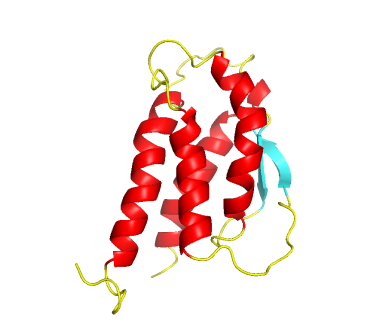
Human Interleukin-12 (IL-12) is a heterodimeric cytokine composed of two subunits, p35 and p40, forming a complex with a molecular weight of approximately 70 kDa. IL-12 is predominantly produced by antigen-presenting cells such as dendritic cells and macrophages. It plays a pivotal role in bridging innate and adaptive immunity by orchestrating the immune system’s response to pathogens and tumors.
IL-12 exerts its effects by binding to the IL-12 receptor (IL-12R), which consists of the IL-12Rβ1 and IL-12Rβ2 subunits. This interaction activates the STAT4 signaling pathway, which is crucial for promoting T helper type 1 (Th1) responses. IL-12 enhances cellular immunity, including the production of interferon-gamma (IFN-γ) and the activation of natural killer (NK) cells, thereby playing a critical role in defense against intracellular pathogens and cancer cells.
| 23, 30 RNLPVATP |
40 DPGMFPCLHH |
50 SQNLLRAVSN |
60 MLQKARQTLE |
70 FYPCTSEEID |
80 HEDITKDKTS |
| 90 TVEACLPLEL |
100 TKNESCLNSR |
110 ETSFITNGSC |
120 LASRKTSFMM |
130 ALCLSSIYED |
140 LKMYQVEFKT |
| 150 MNAKLLMDPK |
160 RQIFLDQNML |
170 AVIDELMQAL |
180 NFNSETVPQK |
190 SSLEEPDFYK |
200 TKIKLCILLH |
| 210 AFRIRAVTID |
219 RVMSYLNAS |
6.12 / 22542.13