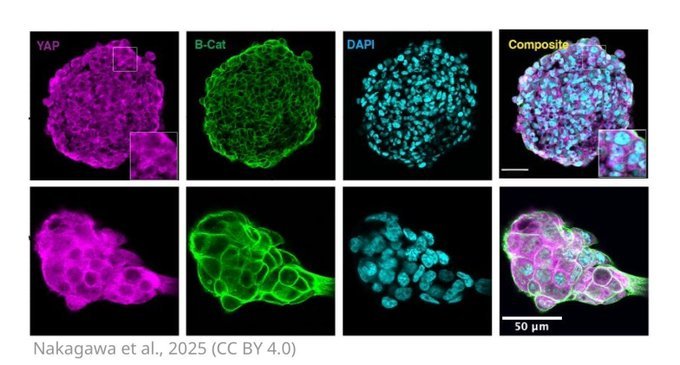
YAP-Mediated Therapy Resistance in NSCLC Depends on Tumor Architecture
This study in eLife highlights that YAP, a protein linked to cancer therapy resistance, behaves differently depending on how cancer cells are cultured. In non-small cell lung cancer (NSCLC) with EGFR or KRAS mutations, resistance to targeted therapies is common. The research shows that acute resistance to EGFR/KRAS/BRAF inhibition is highly dependent on spatial and culture context. In vivo, tumors shrink significantly after EGFR inhibition, but surviving cells exhibit high nuclear YAP in stromal regions. In vitro, monolayer cultures show cell cycle arrest, whereas 3D spheroids undergo cell death upon treatment. The study finds that YAP nuclear activity is a key resistance mechanism, and that forced YAP activation (via YAPS127A) protects cells from drug-induced death in 3D cultures. These results emphasize the importance of using 3D culture models to better mimic tumor architecture and improve drug response predictions.
Nakagawa R, et al. “Tumor Cell Spatial Organization Directs EGFR/RAS/RAF Pathway Primary Therapy Resistance through YAP Signaling.” eLife. Published May 2025.